Featured

What is Aerospace Engineering?

Aerospace Engineering

Be yourself; Everyone else is already taken.

— Oscar Wilde.

Aerospace engineering is the primary field of engineering concerned with the development of aircraft and spacecraft. It has two major and overlapping branches: aeronautical engineering and astronautical engineering. Avionics engineering is similar, but deals with the electronics side of aerospace engineering. Aerospace engineers work with aircraft. They are involved primarily in designing aircraft and propulsion systems and in studying the aerodynamic performance of aircraft and construction materials. They work with the theory, technology, and practice of flight within the Earth’s atmosphere. Aerospace engineering includes mathematics, fluid mechanics, electronic technology, aerodynamics, control engineering, noise control, and aeronautics. Others are flight test, avionics, risk and reliability, solid mechanics, materials science, software, and many more. Aerospace engineers typically specialize in one of two types of engineering: aeronautical or astronautical.

Aeronautical engineers– work with aircraft. They are involved primarily in designing aircraft and propulsion systems and in studying the aerodynamic performance of aircraft and construction materials. They work with the theory, technology, and practice of flight within the Earth’s atmosphere.

Astronautical engineers– work with the science and technology of spacecraft and how they perform inside and outside the Earth’s atmosphere. This includes work on small satellites such as cubesats, and traditional large satellites.  

Aeronautical and astronautical engineers face different environmental and operational issues in designing aircraft and spacecraft. However, the two fields overlap a great deal because they both depend on the basic principles of physics. And with commercial travel becoming even more frequent recently demand’s for more aerospace engineer’s has risen 6% by 2026.

What is NASA

NASA insignia - Wikipedia

NASA stands for National Aeronautics and Space Administration. NASA is a U.S. government agency that is responsible for science and technology related to air and space. The Space Age started in 1957 with the launch of the Soviet satellite Sputnik. NASA opened for business on Oct. 1, 1958. The agency was created to oversee U.S. space exploration and aeronautics research. The administrator is in charge of NASA. The NASA administrator is nominated by the president and confirmed by a vote in the Senate. Many people know something about NASA’s work. But most probably have no idea about how many different things the agency does. Astronauts in orbit conduct scientific research. Satellites help scientists learn more about Earth. Space probes study the solar system and beyond. New developments improve air travel and other aspects of flight. NASA is also beginning a new program to send humans to explore the Moon and Mars. In addition to those major missions, NASA does many other things. The agency shares what it learns so that its information can make life better for people worldwide. For example, companies can use NASA discoveries to create new spinoff products. NASA helps teachers prepare students who will be the engineers, scientists, astronauts and other NASA workers of the future. They will be the adventurers who will continue exploration of the solar system and universe. NASA has a tradition of investing in programs and activities that inspire students, educators, families and communities in the excitement and discovery of exploration. NASA offers training to help teachers learn new ways to teach science, technology, engineering and mathematics. The agency also involves students in NASA missions to help them get excited about learning. When NASA started, it began a program of human spaceflight. The Mercury, Gemini and Apollo programs helped NASA learn about flying in space and resulted in the first human landing on the Moon in 1969. Currently, NASA has astronauts living and working on the International Space Station. NASA’s robotic space probes have visited every planet in the solar system and several other celestial bodies. Telescopes have allowed scientists to look at the far reaches of space. Satellites have revealed a wealth of data about Earth, resulting in valuable information such as a better understanding of weather patterns. NASA has helped develop and test a variety of cutting-edge aircraft. These aircraft include planes that have set new records. Among other benefits, these tests have helped engineers improve air transportation. NASA technology has contributed to many items used in everyday life, from smoke detectors to medical tests. In 2018, NASA celebrated its 60th anniversary.

What is Lockheed Martin

Allan Loughead and his brother Malcolm Loughead had operated an earlier aircraft company, Loughead Aircraft Manufacturing Company, which was operational from 1912 to 1920. The company built and operated aircraft for paying passengers on sightseeing tours in California and had developed a prototype for the civil market, but folded in 1920 due to the flood of surplus aircraft deflating the market after World War I. Allan went into the real estate market while Malcolm had meanwhile formed a successful company marketing brake systems for automobiles. In 1926, Allan Lockheed, John Northrop, Kenneth Kay and Fred Keeler secured funding to form the Lockheed Aircraft Company in Hollywood. This new company utilized some of the same technology originally developed for the Model S-1 to design the Vega Model. In March 1928, the company relocated to Burbank, California, and by year’s end reported sales exceeding one million dollars. From 1926 to 1928 the company produced over 80 aircraft and employed more than 300 workers who by April 1929 were building five aircraft per week. In July 1929, majority shareholder Fred Keeler sold 87% of the Lockheed Aircraft Company to Detroit Aircraft Corporation. In August 1929, Allan Loughead resigned. The Great Depression ruined the aircraft market, and Detroit Aircraft went bankrupt. A group of investors headed by brothers Robert and Courtland Gross, and Walter Varney, bought the company out of receivership in 1932. The syndicate bought the company for a mere $40,000. Ironically, Allan Loughead himself had planned to bid for his own company, but had raised only $50,000, which he felt was too small a sum for a serious bid. In 1934, Robert E. Gross was named chairman of the new company, the Lockheed Aircraft Corporation, which was headquartered at what is now the airport in Burbank, California. His brother Courtlandt S. Gross was a co-founder and executive, succeeding Robert as chairman following his death in 1961. The company was named the Lockheed Corporation in 1977. The first successful construction that was built in any number 141 aircraft was the Vega first built in 1927, best known for its several first- and record-setting flights by, among others, Amelia Earhart, Wiley Post, and George Hubert Wilkins. In the 1930s, Lockheed spent $139,400 to develop the Model 10 Electra, a small twin-engined transport. The company sold 40 in the first year of production. Amelia Earhart and her navigator, Fred Noonan, flew it in their failed attempt to circumnavigate the world in 1937. Subsequent designs, the Lockheed Model 12 Electra Junior and the Lockheed Model 14 Super Electra expanded their market.

What is Airbus

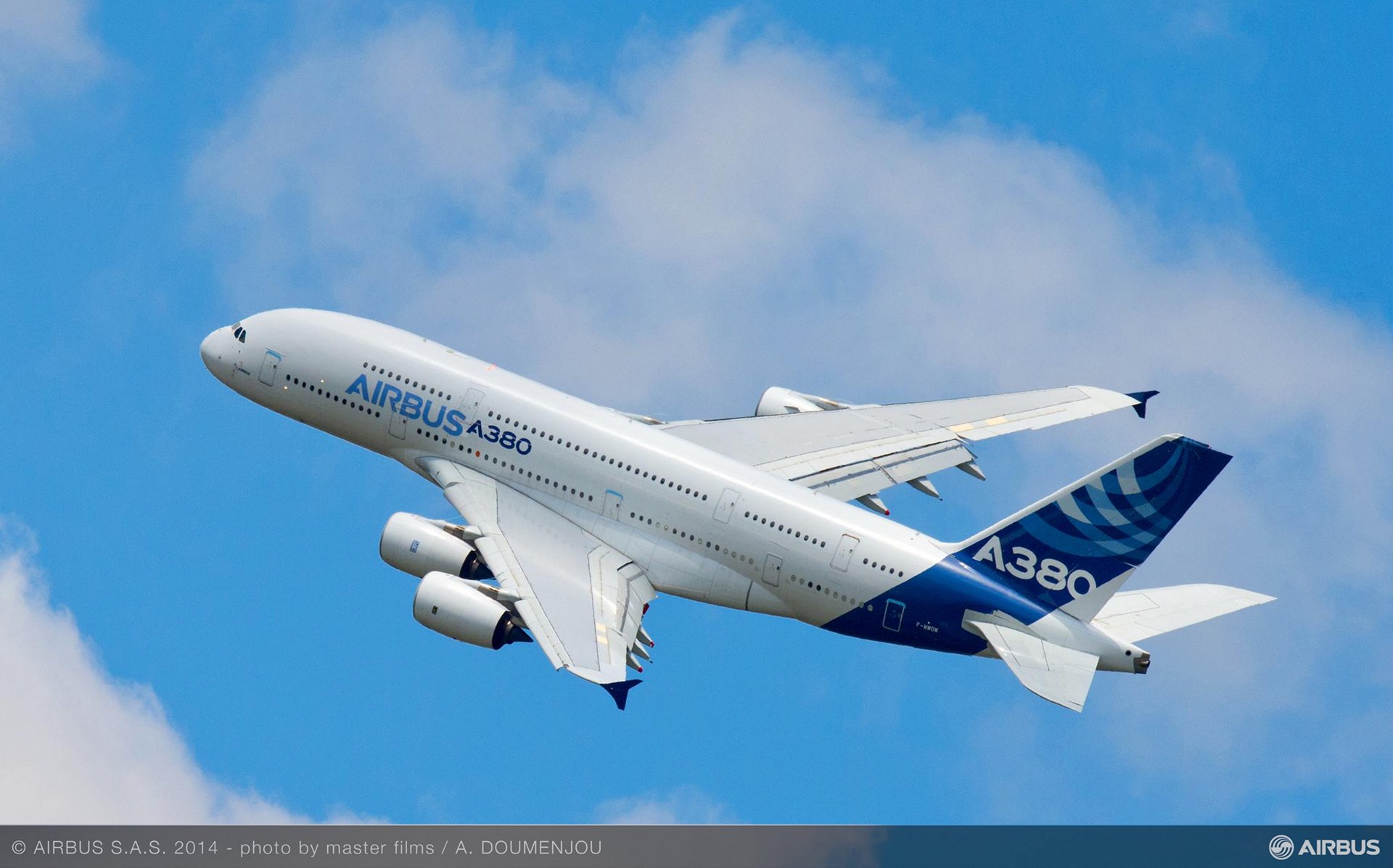
Airbus is a European multinational aerospace corporation. In 2019, Airbus was the world’s largest airliner manufacturer and took the most airliner orders. Airbus is registered in the Netherlands; its shares are traded in France, Germany and Spain. It designs, manufactures and sells civil and military aerospace products worldwide and manufactures aircraft in the European Union and various other countries. The company has three divisions: Commercial Aircraft, Defence and Space, and Helicopters, the third being the largest in its industry in terms of revenues and turbine helicopter deliveries. The company’s main civil aeroplane business is based in Blagnac, France, a suburb of Toulouse, with production and manufacturing facilities mostly in the European Union but also in China, the United Kingdom, the United States and Canada. Final assembly production is based in Toulouse, France; Hamburg, Germany; Seville, Spain; Tianjin, China; Mobile, United States; and Montreal, Canada. The company produces and markets the first commercially viable digital fly-by-wire airliner, the Airbus A320, and the world’s largest passenger airliner, the A380. The 12,000th aircraft, an A220, was delivered to Delta Air Lines on 20 May 2019. By October 2016, the global Airbus fleet had performed more than 110 million flights, totalling over 215 billion kilometres and carrying 12 billion passengers. Airbus’s registered headquarters is in Leiden, Netherlands, with the operating head office located in Toulouse. The company is led by CEO Guillaume Faury and is a component of the Euro Stoxx 50 stock market index.

What is Boeing

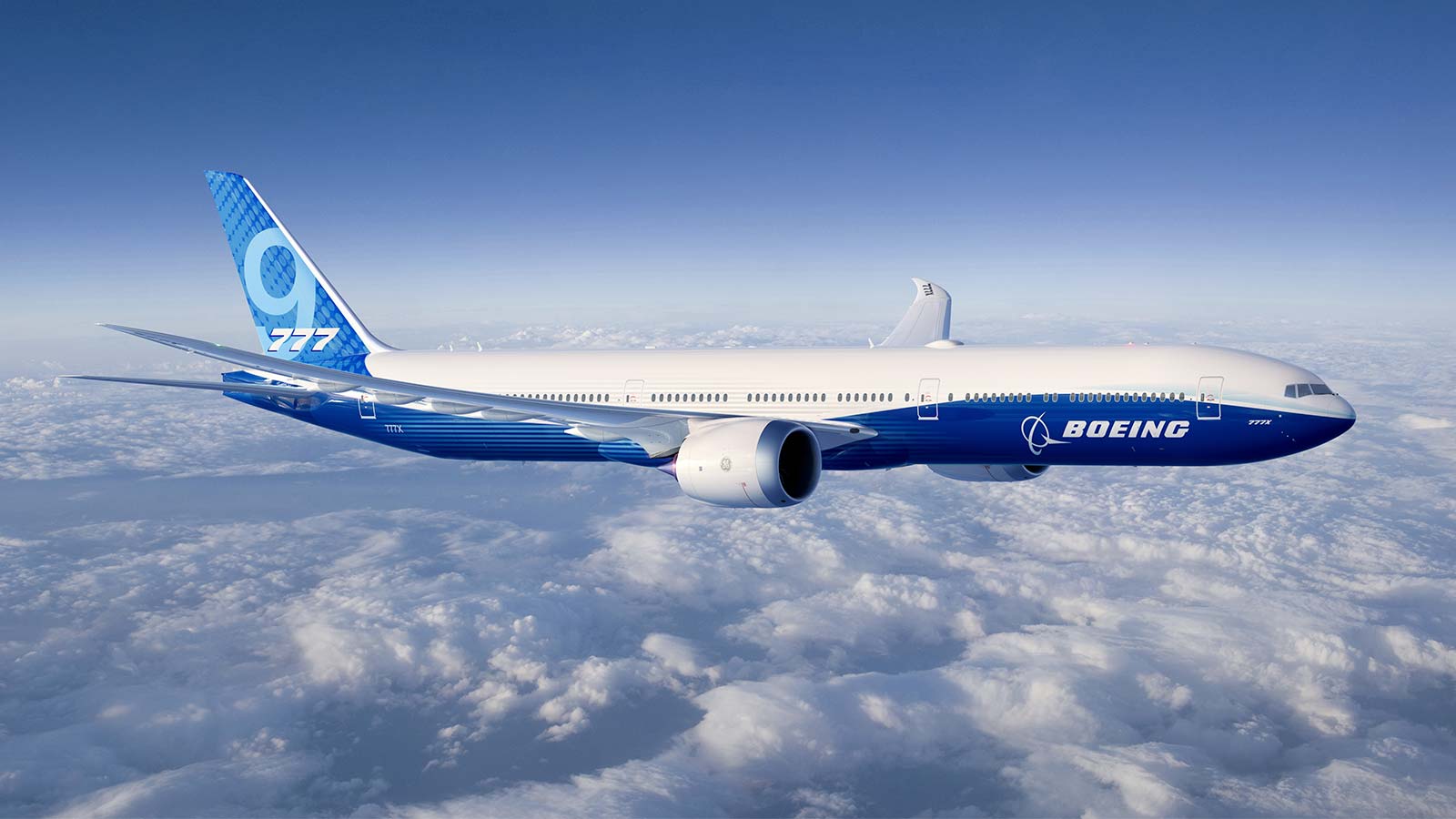
The Boeing Company was started in 1916, when American lumber industrialist William E. Boeing founded Aero Products Company in Seattle, Washington. Shortly before doing so, he and Conrad Westervelt created the “B&W” seaplane. In 1917, the organization was renamed Boeing Airplane Company, with William Boeing forming Boeing Airplane & Transport Corporation in 1928.[14] In 1929, the company was renamed United Aircraft and Transport Corporation, followed by the acquisition of several aircraft makers such as Avion, Chance Vought, Sikorsky Aviation, Stearman Aircraft, Pratt & Whitney, and Hamilton Metalplane. In 1931, the group merged its four smaller airlines into United Airlines. In 1934, the manufacture of aircraft was required to be separate from air transportation. Therefore, Boeing Airplane Company became one of three organizations to arise from the dissolution of United Aircraft and Transport; the other two groups were United Aircraft and United Airlines. In 1960, the company bought Vertol Corporation, which at the time, was the biggest independent fabrication of helicopters. During the 1960s and 1970s, the company diversified into industries such as outer space travel, marine craft, agriculture, energy production and transit systems. In 1995, Boeing partnered with Russian, Ukrainian and Anglo-Norwegian organizations to create Sea Launch, a company providing commercial launch services sending satellites to geostationary orbit from floating platforms. In 2000, Boeing acquired the satellite segment of Hughes Electronics. Corporate headquarters were moved from Seattle to Chicago in 2001. After two fatal crashes of the Boeing 737 MAX narrow-body passenger airplanes in 2018 and 2019, aviation regulators and airlines around the world grounded all 737 MAX airliners. A total of 387 aircraft were grounded. Boeing’s reputation, business, and financial rating has suffered after these groundings, questioning Boeing’s strategy, governance, and focus on profits and cost efficiency. The Wall Street Journal reported on May 5, 2019 that Boeing had known of the issue with the system for “about a year” before the crash in Indonesia. In December 2019, Boeing announced it will suspend 737 MAX production from January 2020. Soon after, on December 23, then CEO Dennis Muilenburg resigned and was replaced by David Calhoun.

Kardashev Scale

Credit: Chris Cold

You maybe wondering what the Kardashev Scale is and what it’s purpose is with Aerospace Engineering? The Kardashev Scale is basically a scale that shows where we are on our path to become a advanced civilization capable of control our entire galaxy. As of right know what type of civilization are we at the moment in 2020 well the answer may be disappointing but we have barely reached type 1 status we are only at type 0.7 on the Kardashev scale.

Type 1

THE FUTURE OF HUMANITY AND THE TURNING POINT OF OUR CIVILIZATION ...

A type 1 civilization is given to a species who have been able to harness all the energy that is available from a neighboring star, gathering and storing it to meet the energy demands of a growing population. This means that we would need to boost our current energy production over 100,000 times to reach this status. However, being able to harness all Earth’s energy would also mean that we could have control over all natural forces. Human beings could control volcanoes, the weather, and even earthquakes!

Type 2

Type 2 by Equiliari on DeviantArt

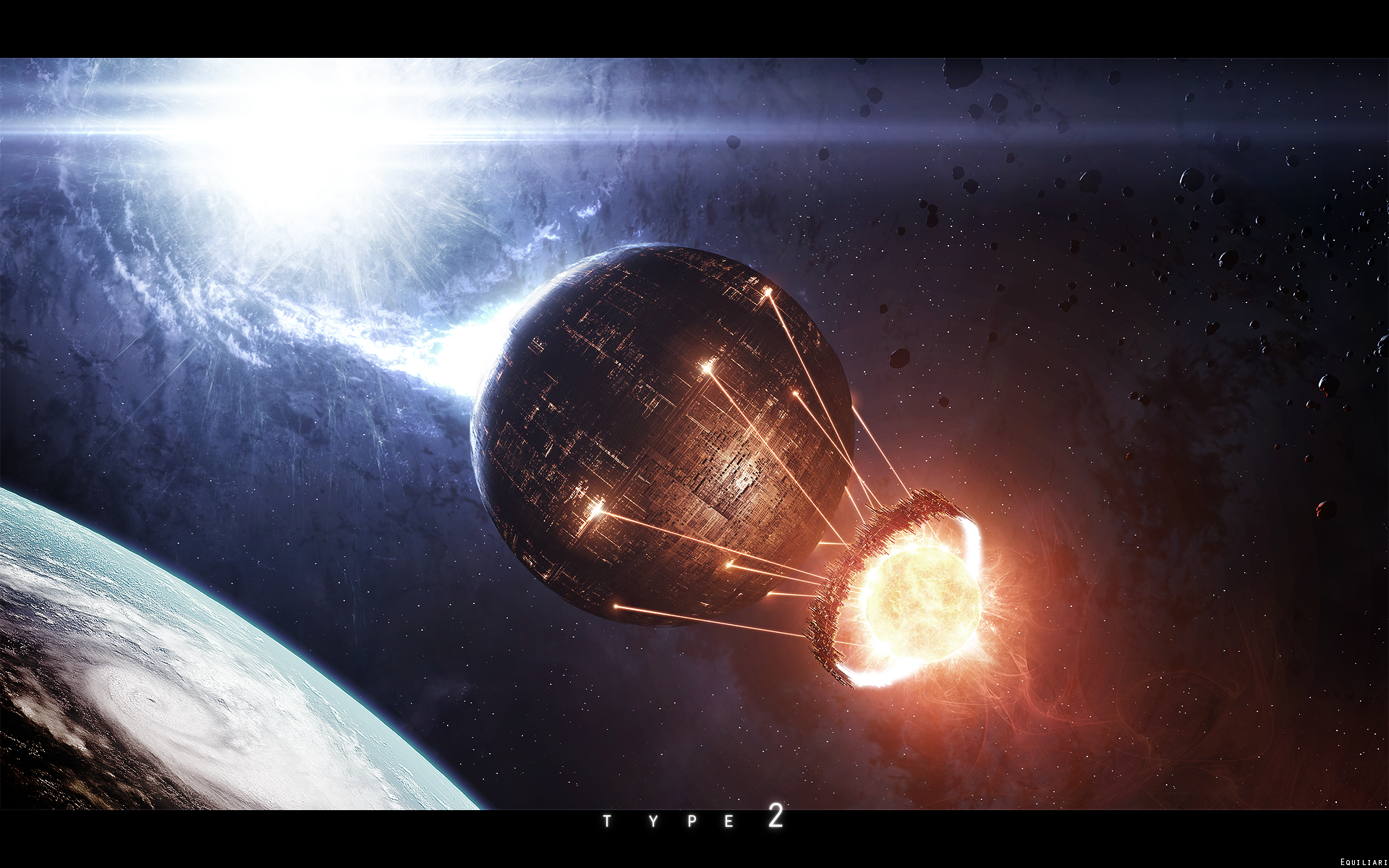
A Type 2 civilization can harness the power of their entire star. Several methods for this have been proposed. The most popular of which is the hypothetical ‘Dyson Sphere.’ This device, if you want to call it that, would encompass every single inch of the star, gathering most of its energy output and transferring it to a planet for later use. Alternatively, if fusion power had been mastered by the race, a reactor on a truly immense scale could be used to satisfy their needs. Nearby gas giants can be utilized for their hydrogen, slowly drained of life by an orbiting reactor. What would this much energy mean for a species? Well, nothing known to science could wipe out a Type II civilization. Take, for instance, if humans survived long enough to reach this status, and a moon sized object entered our solar system on a collision course with our little blue planet–we’d have the ability to vaporize it out of existence. Or if we had time, we could move our planet out of the way, completely dodging it. But let’s say we didn’t want to move Earth are there any other options? Well yes, because we’d have the capability to move Jupiter, or another planet of our choice, into the way.

Type 3

Kardashev civilizations

A type 3 civilization is a species that has become galactic travelers with knowledge of everything having to do with energy, resulting in them becoming a master race. In terms of humans, hundreds of thousands of years of evolution may result in the inhabitants of this type III civilization being incredibly different from the human race as we know it. These may be cyborgs, with the descendants of regular humans being a sub-species among the now-highly advanced society. These wholly biological humans would likely be seen as being disabled, inferior, or unevolved by their cybernetic counterparts. At this stage, we would have developed colonies of robots that are capable of ‘self replication’; their population may increase into the millions as they spread out across the galaxy, colonizing star after star. And these being might build Dyson Spheres to encapsulate each one, creating a huge network that would carry energy back to the home planet. But stretching over the galaxy in such a manner would face several problems; namely, the species would be constrained by the laws of physics. Particularly, light-speed travel. That is, unless they develop a working warp drive, or use that immaculate energy cache to master wormhole teleportation, they can only get so far.

Soon we will reach type 3 status which will allow us to essentially become controllers of everything in our Milky way Galaxy. This is our end goal and there is only one way to reach that level we need more Aerospace and Aeronautical Engineers because they are the future that will lead us to the Stars.

Fun Facts

Image result for aerospace and aeronautical engineering fun facts
  • Aerospace engineers work on airplanes, space shuttles, satellites, and even missiles. They need advanced training in mathematics and physics. Aerospace engineering is one of the most challenging engineering fields.
  • In addition to designing and engineering aircraft, engineers must test the crafts for safety. Simulations with small models allow engineers to evaluate a design’s potential flaws.
  • Aerospace engineers typically need a bachelor’s degree in aeronautics engineering or a similar field. Thirty percent of aerospace engineers have a master’s degree.
  • Aerospace engineers earn an average of $58.00 per hour, higher than most fields. Annually, engineers can expect to earn between $73,000 and $143,000, depending on their experience and education.
  • Jobs are limited for this field since the air and space industry is a small one. Companies like Boeing need only a few airplanes designed.
  • Aerospace engineers usually work for the federal government or manufacturing industries. A few work for NASA. Engineers generally work in an office environment.
  • Aerospace engineers can specialize in designing different types of aerospace products.
  • Aerospace engineers often become experts in one or more related fields: aerodynamics, thermodynamics, celestial mechanics, flight mechanics, propulsion, acoustics, and guidance.
  • While aeronautical engineering was the original term, the broader term “aerospace ” has replaced it in use.

Various types of Aircraft

Besides being called just regular planes or aircrafts there are actually 3 types of aircraft that have been developed and each one is either built a specific way or used in a specific way for a number of different scenarios of circumstances.

The aircraft are broken down into 3 various types, with them being Commercial Planes the ones you see in Airports, Private Jets the ones you see in movies where rich people use them, and Propeller planes the old ones which are used for quick and short flights that don’t require that many people.

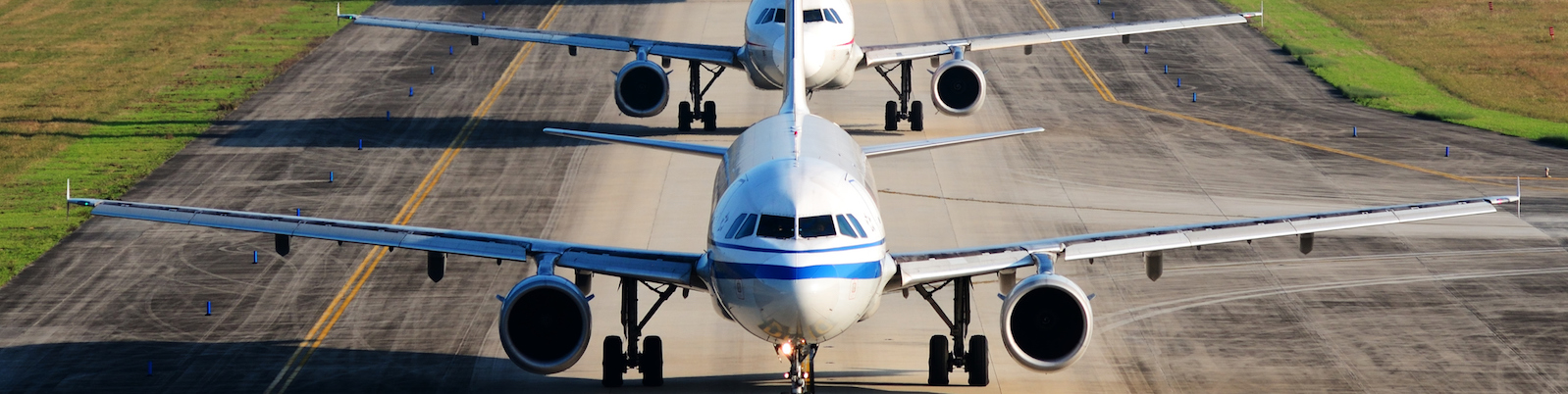
  • Commercial Planes these planes are created for the sole purpose of helping a large group of people go from one state to the other without using the gas in there cars. the interior of the aircraft can usually hold up to about 25-100 people depending not the size of the plane.
Commercial Airliners connected to air bridges
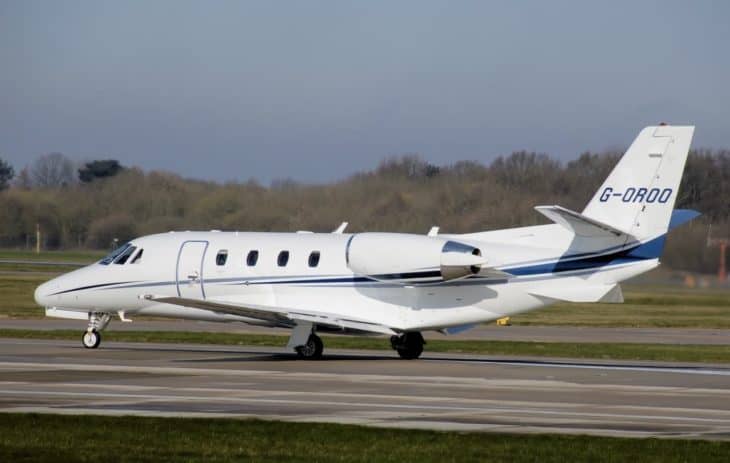
  • Private jets are created for people that can afford it themselves and are rich enough to maintain the aircraft, the interior of the aircraft is very fancy is is mostly used for entertainment purposes for there comfort.
Private Jet
  • Propeller Planes are some of the oldest places they are created for quick and fast trips but there engine is made using a propeller system the same kind of system that old aircrafts are made from. the interior is very small with it being able to hold from 4 to 15 people. It was considered to be the first kind of aircraft ever developed and is still in development even till this day.
private propeller planes

History

23 Photos of the Wright Brothers’ Flights

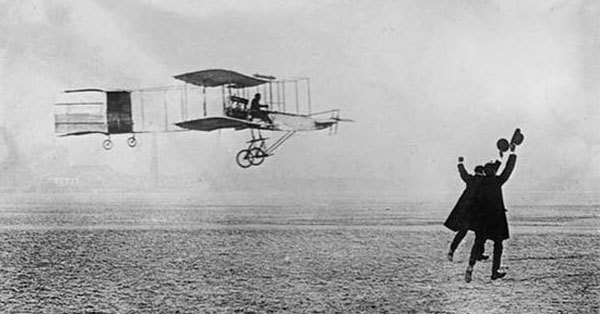
The origin of aerospace engineering can be traced back to the aviation pioneers around the late 19th to early 20th centuries, although the work of Sir George Cayleydates from the last decade of the 18th to mid-19th century. In December 1903, the Wright Brothers performed the first sustained, controlled flight of a powered, heavier-than-air aircraft, lasting 12 seconds. The 1910s saw the development of aeronautical engineering through the design of World War I military aircraft.

Between World Wars I and II, great leaps were made in the field, accelerated by the advent of mainstream civil aviation. Notable airplanes of this era include the Curtiss JN 4, the Farman F.60 Goliath, and Fokker Trimotor. A significant development in aerospace engineering came with the first operational Jet engine-powered airplane, the Messerschmitt Me 262 which entered service in 1944 towards the end of the second World War. The first definition of aerospace engineering appeared in February 1958, considering the Earth’s atmosphere and outer space as a single realm, thereby encompassing both aircraft and spacecraft under the newly coined term aerospace.

In response to the USSR launching the first satellite, Sputnik, into space on October 4, 1957, U.S. aerospace engineers launched the first American satellite on January 31, 1958. The National Aeronautics and Space Administration was founded in 1958 as a response to the Cold War. In 1969, Apollo 11, the first manned space mission to the moon took place. It saw three astronauts enter orbit around the Moon, with two, Neil Armstrong and Buzz Aldrin, visiting the lunar surface. The third astronaut, Michael Collins, stayed in orbit to rendezvous with Armstrong and Aldrin after their visit.

On December 21, 1988, the Antonov An-225 Mriya cargo aircraft commenced its first flight. It holds the records for the world’s heaviest aircraft, heaviest airlifted cargo, and longest airlifted cargo, and has the widest wingspan of any aircraft in operational service. On October 25, 2007, the Airbus A380 made its maiden commercial flight from Singapore to Sydney, Australia. This aircraft was the first passenger plane to surpass the Boeing 747 in terms of passenger capacity, with a maximum of 853. Though development of this aircraft began in 1988 as a competitor to the 747, the A380 made its first test flight in April 2005.

Perks of Being a Aerospace and Aeronautical Engineer

Image result for perks of being an aerospace engineer

When you start a job you are granted many perks and benefits that make you life easier to live, for just doing your job. Some of these perks include

Medical, Dental, and Vision Coverage

Aerospace offers rich medical, dental, and vision coverage in addition to both dependent and healthcare flexible spending accounts. Other benefits include short-term and long-term disability leave, life insurance, and an office ergonomic support program to ensure a safe and effective workplace.

Time Off

To help employees balance their professional and personal lives, Aerospace offers not only paid vacation and holidays but also generous sick leave. In addition to other leave programs, we also offer Parental Leave for employees who are expecting a new child through birth, adoption, or foster placement.

Retirement

Aerospace offers a 401(k) plan with a total company-paid benefit of 8, 10, or 12 percent, based on years of service. You will be immediately eligible and vested.

Additionally, Aerospace also offers a retiree medical plan, as well as financial planning tools and one-on-one investment counseling.

Health and Wellness

An Employee Assistance Program as well as a pre- and post-natal support program for both mothers and fathers are available at no cost to you. A free 24-hour nurse line is also available, allowing employees to access useful, easy-to-understand information—24/7—to help you make sound healthcare decisions.

Additionally, Aerospace offers on-campus wellness events and activities, including a walking club, weekly organic vegetable delivery, Weight Watchers, yoga (El Segundo location), and fitness facilities (El Segundo and Chantilly locations).

Flexibility

Most of Aerospace’s full-time employees have the option of working a 9/80 schedule, with alternating Fridays off.

On-Campus Dining

There are onsite dining options in both Chantilly (Virginia) and El Segundo (California), as well as common areas to meet with coworkers to enjoy coffee, snacks, or lunch.

Social Clubs

A selection of social clubs—from dragon boat racing to book clubs—is available to all employees who wish to participate, allowing coworkers to get to know each other outside the office. If one does not fit your particular interest, you are welcome to start a new one!

Companies of Aerospace and Aeronautics

If you want to be an Aerospace or Aeronautical Engineer you have to know the multiple companies there are. The area of Aerospace and Aeronautics has multiple companies ranging from the Boeing to the Martin-Baker here are the top 3 best Aerospace and Aeronautical Companies.

  • Boeing- one of the most famous and well known companies of aeronautics this company is number one on the demands list for commercial aircraft.
Image result for boeing aircraft
  • Airbus right behind Boeing is the Airbus this company is usually called to create massive aircraft that are used for international travel like from on continent to the next.
Image result for airbus aircraft
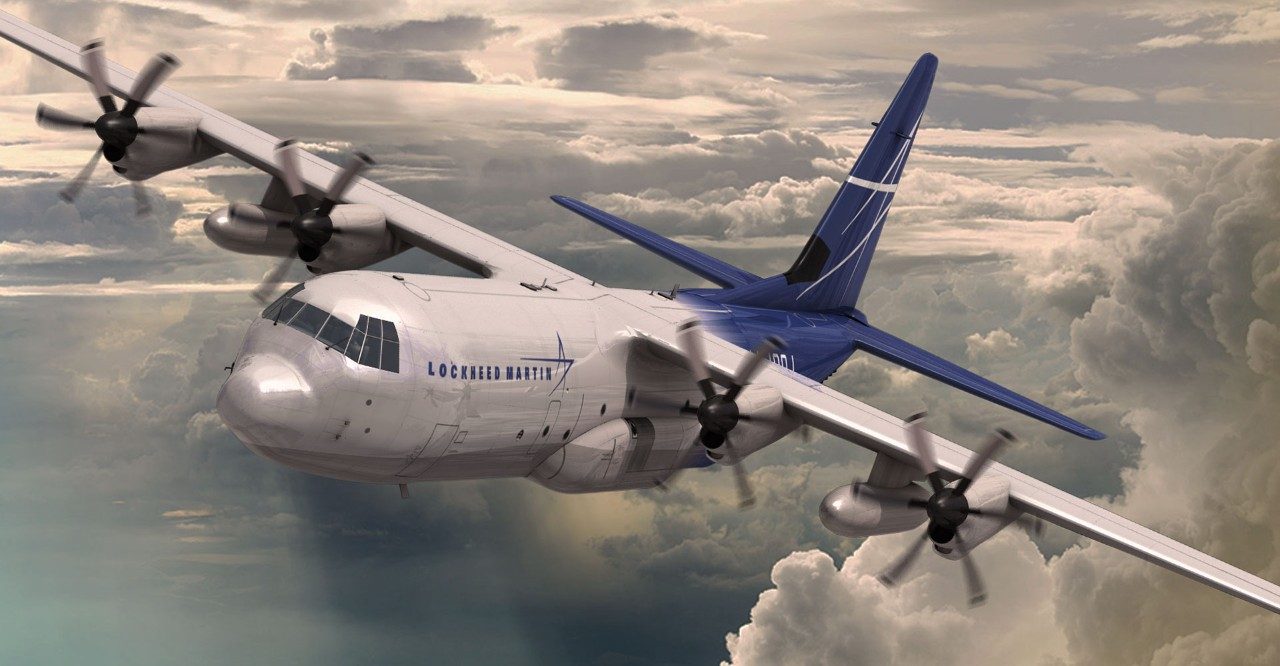
  • Lockheed Martin is more of a Company that builds aircraft for the military. They have built many carriers and fighter jets that have helped the military expand there arsenals.
Image result for lockheed martin commercial aircraft
Design a site like this with WordPress.com
Get started